
Wearing the right bra size starts with knowing how to measure bust correctly. Whether you’re shopping online or just want a better fit, taking accurate bust measurements at home is the first step. In this guide, you’ll learn how to measure your bra size, how to find the right cup size, and how to size a bra correctly using just a measuring tape.
How to Measure Bust at Home
To measure your bust, all you need is a flexible measuring tape, a mirror, and a non-padded bra. Here’s how to take a bust measurement step by step:

- Wear a non-padded bra that supports but doesn’t add volume.
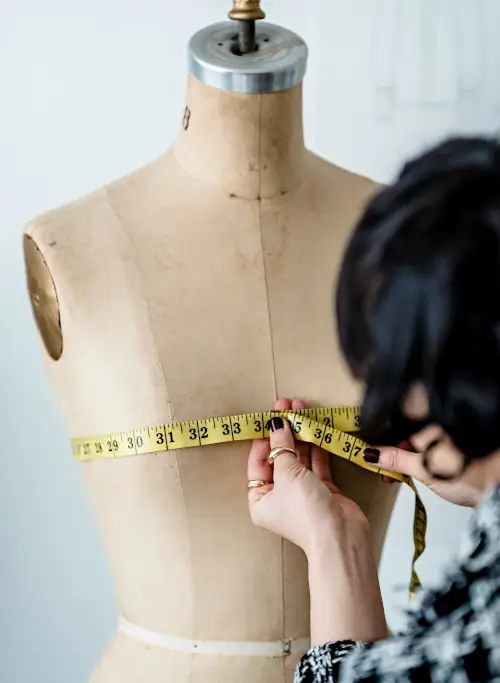
- Wrap the measuring tape around the fullest part of your bust, usually across the nipples.
- Keep the tape straight and level around your back and snug but not tight.
- Note the number in inches. This is your bust measurement.
Understanding how to measure bust accurately is key to determining your correct bra size.
How to Measure Bra Size
After you’ve taken your bust measurement, you can calculate your bra size by combining your band size and cup size. Below are the two main steps for how to measure bra size at home. This includes the traditional method (adding inches) along with a more accurate, modern explanation so your results fit better with today’s bra sizing.
Step 1: Measure Band Size
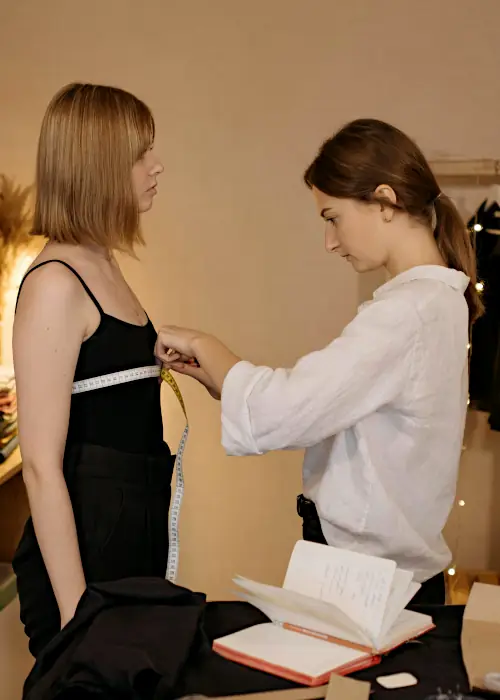
Wrap the measuring tape snugly around your ribcage, directly under your bust. The tape should sit flat, level all the way around, and feel firm without restricting your breathing.
Traditionally, bra sizing used the “add 4 if even, add 5 if odd” method. This is the system still used by some older US size charts, which is why you may see it referenced online. Example: 31″ + 5 = 36 band size
However, most modern bra brands now recommend using the actual underbust measurement (or rounding to the nearest whole inch) because fabrics stretch more than they used to. If you prefer the modern approach, simply round your underbust measurement to the closest even number, for example, 31″ becomes 32.
Both methods will give you a starting point, and you can adjust based on comfort and brand differences.
Step 2: Measure Cup Size
Take your bust measurement from earlier and subtract your calculated band size. The difference in inches determines your cup size.
Here’s the basic cup-size formula:
- 1″ difference = A cup
- 2″ = B
- 3″ = C
- 4″ = D
- 5″ = DD/E
- 6″ = DDD/F, and so on.
Your bra size is your band size plus your cup letter. This is how to measure bra cup size and determine your full bra size at home.
How to Measure Bust and Find Your Cup Size
Understanding how to measure bust and translate that number into a cup size is essential for finding a bra that truly fits. Once you’ve measured your band size and bust size, the difference between the two numbers determines your cup size. The chart below shows how each inch of difference corresponds to a cup letter.
Step-by-Step Quick Guide
- Measure your band size by wrapping the tape around your ribcage under your bust.
- Measure your bust at the fullest point.
- Subtract your band size from your bust measurement.
- Match the difference (in inches) to the cup size table below.
Cup Size Difference Chart
| Difference (in Inches) | Cup Size |
|---|---|
| 1″ | A |
| 2″ | B |
| 3″ | C |
| 4″ | D |
| 5″ | DD / E |
| 6″ | DDD / F |
| 7″ | G |
| 8″ | H |
| 9″ | I |
| 10″ | J |
How to Use the Chart
If your bust measures 39″ and your band size is 34″, the difference is 5 inches, which corresponds to a DD/E cup. This method works for most US bra brands, though some brands may label cups slightly differently. If you fall between numbers, re-measure to confirm or try sister sizes to find the closest fit.
How to Check Bra and Cup Size
Once you know how to check bra and cup size, you can confirm the fit by checking these signs:
- Band should be snug but not too tight.
- Cups should fully hold your breasts without gaping or spilling.
- Straps should stay in place without digging into your shoulders.
Learning how to check bra and cup size can save you from common discomforts and improve support.
How to Measure Bra Size at Home Accurately
Many people ask how to measure bra size at home without professional help. The key is to take both your bust and band measurements while standing upright, and double-check your tape is flat all the way around.
If you’re unsure, take the measurements twice and use the average. This method helps ensure you size a bra correctly without leaving the house.
How to Size a Bra Correctly
Getting the right bra fit is about more than numbers. Here’s how to size a bra correctly:
- Try on a few different styles using your calculated size.
- Move around to see how the bra fits when you’re active.
- Consider sister sizes (e.g., 34C = 36B or 32D) if one size is slightly off.
A well-sized bra can improve posture, comfort, and confidence.
How to Measure Bust for a Perfect Fit
Use the Right Tools
To measure bust accurately, you only need a soft measuring tape, a mirror, and a non-padded bra. A soft tape ensures it contours to your body, and a mirror helps you check whether the tape stays level across your back.
Stand in the Correct Posture
Posture is one of the biggest factors in how to measure bust measurements correctly. Stand upright with your shoulders relaxed and arms at your sides. Avoid slouching or lifting your arms, as this can distort the measurement.
Position the Tape Correctly
Wrap the tape around the fullest part of your bust, usually across the nipples, while keeping it straight and snug. The tape should lie flat against your skin without digging in or sagging.
Double-Check for Accuracy
Take the measurement twice to make sure you get a consistent number. If the two readings differ, measure a third time and use the average. Accurate numbers are essential for determining both cup and band size.
How to Measure Bust Without a Bra
Measuring Braless for Natural Bust Shape
If you don’t have a non-padded bra or prefer to measure braless, you can still get accurate results. Stand up straight and let your breasts rest naturally. This method is especially helpful for people whose bust shape changes depending on bra type.
Support Lightly If Needed
If you have a larger bust, gently lift the breast tissue with one hand while positioning the tape with the other. This prevents the tape from sliding downward and helps you capture the fullest point correctly.
Keep the Tape Level and Snug
Just like measuring with a bra, the tape should remain horizontal and comfortably snug. Check in the mirror to ensure the back of the tape is not too high or too low.
How to Measure Bust in Different Positions
Why Multiple Positions Matter
Breast tissue shifts depending on posture, which can slightly change your measurement. Professional bra fitters use more than one measuring position to get a fuller understanding of bust volume.
Standing Bust Measurement
Measure while standing upright for your everyday fit. This gives you the baseline number used for most bra and top sizing.
How to Measure Bust Leaning Forward Measurement
Lean forward about 90 degrees and wrap the tape around the fullest point of your hanging bust. This helps include all breast tissue, especially useful for individuals with full-on-bottom or fuller cup sizes.
How to Measure Bust Lying Down Measurement
Lie on your back and take another measurement. This reduces the effect of gravity and gives a more compressed number. Comparing all three helps you understand your natural range.
How to Measure Bust for Clothing and Dress Sizes
Why Clothing Measurements Differ from Bra Measurements
Many people learning how to measure bust assume that bra measurements work the same for dresses and tops. Clothing measurements rely only on bust circumference, no band or cup calculations, so it’s important to measure correctly depending on the garment.
Measuring for Tops and Dresses
Keep your arms relaxed by your sides and measure across the fullest part of your bust, just as you would for a bra measurement. This number helps determine shirt, dress, and jacket sizing.
Measuring for Form-Fitted Styles
For fitted dresses, evening gowns, or tailored tops, take the measurement while standing tall and wearing the undergarments you plan to use. Shapewear or padded bras can change the final fit.
How to Measure Bust for Plus Size and Full Bust Figures
Use a Longer Tape or Extension
If your existing measuring tape is too short, use a second tape or a piece of string as an extension. Accuracy matters more than the method.
Take Two Measurements for Better Accuracy
Bust shape can vary more dramatically with full-bust or plus-size bodies. Take the measurement once standing and once leaning forward, then compare or average the two.
Focus on Tape Placement
Heavier breast tissue may cause the tape to slip downward. Use a mirror to check alignment, and reposition as needed so the tape stays horizontal across your back.
How to Measure Bust Correctly for a Reliable Bra Size
Measure Both Bust and Band
To size a bra accurately, you need both your bust measurement and a separate band measurement. Many people focus only on the bust, but the band provides the structure and determines how the cup size is calculated.
Use the Difference Method for Cup Size
Subtract your band size from your bust measurement to find the cup size. This difference in inches translates directly to cup letters, one inch per cup.
Consider Sister Sizes
Even after learning how to measure bust correctly, different brands may fit differently. Sister sizes (such as 34C, 36B, and 32D) share similar cup volume and can help you fine-tune fit.
How to Measure Bust to Avoid Common Mistakes
Don’t Measure Over Thick Clothing
Measuring over sweaters or padded bras adds extra inches and gives inaccurate results. Wear a thin, non-padded bra or measure directly against your skin.
Don’t Pull the Tape Too Tight
If the tape is digging into your skin, your measurement will be smaller than your true bust size. The tape should feel snug, not tight.
Avoid Letting the Tape Sag
A sagging tape leads to an inflated measurement. Always check symmetry in the mirror, front and back.
How to Measure Bust When Breasts Are Uneven
Acknowledge Natural Asymmetry
Many people have one breast bigger than the other, this is normal. When learning how to measure bust in this situation, always measure using the fuller side.
Choose the Right Cup and Style
Bras with stretch fabric, removable padding, or side support can help balance unevenness. The key is to fit the larger breast and adjust the smaller side with padding if needed.
FAQ on How to Measure Bust
How do I know if I measured my bust correctly?
Check that the measuring tape is straight across your back, snug but not tight, and placed across the fullest part of your bust.
How often should I remeasure my bra size?
You should remeasure every 6–12 months, especially after weight changes, pregnancy, or changes in physical activity.
Can I measure my bust without a measuring tape?
In a pinch, use a string and then measure it against a ruler or yardstick. A soft measuring tape is still the most accurate method.
Why does my bra still feel uncomfortable even if I followed the size guide?
Different brands and styles fit differently. Try various cuts and materials, and consider trying your sister sizes for a better fit.
How do I know if my bust measurement is accurate?
Your measurement is accurate if the tape is level around your back, sits across the fullest part of your bust, and feels snug but not tight. If the tape dips or rides up, the measurement may be off. Measuring twice helps confirm accuracy.
What should I do if my measurements change throughout the year?
It’s normal for bust measurements to fluctuate due to weight changes, hormonal shifts, exercise routines, or pregnancy. Remeasure every 6–12 months, or anytime your current bras start feeling tight, loose, or uncomfortable.
Can I measure my bust using something other than a measuring tape?
Yes. If you don’t have a soft tape measure, you can use a piece of string and mark the length with your fingers. Lay the string flat and measure it with a ruler or yardstick. This method is less precise but works in a pinch.
Why don’t my measurements match the sizes in the store?
Different brands use slightly different sizing systems. European, UK, and US sizes don’t always align perfectly. Try multiple brands, and consider sister sizes if your usual size doesn’t feel right. Fit always matters more than the number on the tag.
How do I measure bust if one breast is larger than the other?
Always take measurements using the larger breast. Bras are designed to accommodate slight asymmetry. For a more balanced look, add removable padding or use a bra with stretch fabric on the smaller side.
Should I measure my bust over clothing?
Light clothing like a thin T-shirt or non-padded bra is fine, but avoid measuring over sweaters, hoodies, or padded bras. Thick layers add inches and distort the result.
Is there a difference between bust, chest, and underbust measurements?
Yes:
- Bust = fullest part of the breasts
- Chest/Upper Bust = above the bust, under the armpits
- Underbust/Band = around the ribcage directly beneath the breasts
Each measurement serves a different purpose in clothing or bra sizing.
How do I measure bust for a dress or top, not a bra?
Measure around the fullest part of your bust while standing straight. Clothing uses the bust circumference only, no cup or band calculations. For fitted dresses, measure while wearing the undergarments you plan to wear with that outfit.
What if my cup size seems too big or too small after measuring?
Cup sizing depends on both band and bust measurements. If your measured size feels off, try:
- Rechecking your tape placement
- Trying sister sizes
- Trying different bra styles (plunge, full cup, balconette)
It’s common for measurements and real-world fit to differ slightly.
How do I measure bust during pregnancy or breastfeeding?
Measure more frequently, every few weeks, because breast size changes rapidly. Use a soft, comfortable bra and take measurements while wearing the type of bra you expect to use most often.
Why do some bras still feel uncomfortable even if they match my measurements?
Bra comfort depends on more than just size. Factors include:
- Strap width
- Band elasticity
- Cup shape compatibility
- Fabric stiffness
- Underwire shape
Your size is a starting point, but the perfect bra may depend on the brand and style.
Final Thoughts on How to Measure Bust
Now that you know how to measure bust, you’re equipped to find the right bra every time. By understanding how to measure bra size, including both band and cup, you’ll avoid poor fits and feel more comfortable every day.
Whether you’re learning how to measure bra size at home or just brushing up on how to take a bust measurement, the key is accuracy and consistency. For more measuring tips, visit the Body & Fashion Sizing section of How To Measure It.